
12 min read
Asking the Wrong Question: Coverage or Ridership?

Written by Dr. Ümit Kuvvetli
Founder & Chief Optimization Scientist
The future of public transport won't be defined by more data—but by better-defined objectives.
For decades, public transport planning has revolved around a familiar debate.
Should transit agencies invest their limited resources to maximize ridership?
Or should they prioritize providing coverage, ensuring that as many communities as possible have access to public transportation?
It is an important question. It always has been. The debate is still alive.
But it is no longer sufficient.
Because cities have changed. Technology has changed. Data has changed. And perhaps most importantly… decision-making has changed.
Today, the real challenge is no longer choosing between coverage and ridership.
The real question is much more fundamental:
How does a city define success?
Because the way success is defined ultimately determines the network that will be built—a tension that also appears when cities ask whether equal service everywhere is really optimal.

You Can't Optimize the Wrong Problem
Many transit optimization projects begin with operational questions.
"How many buses should operate on this corridor?"
"Which routes should receive higher frequencies?"
These are important questions. But they come far too late.
Before discussing timetables, fleet allocation or route design, transit agencies need to answer something much more fundamental:
What exactly are we trying to optimize?
Is success measured by:
- carrying more passengers?
- improving accessibility?
- reducing operating costs?
- lowering carbon emissions?
- minimizing waiting times?
- improving reliability?
- increasing social equity?
Every one of these objectives is valid. But they do not produce the same network.
The Era of Single KPIs Is Over
Public transport has become one of the most complex operational systems cities manage.
Success can no longer be represented by a single performance indicator.
Today's transit agencies must simultaneously consider:
- Ridership
- Accessibility
- Coverage
- Reliability
- Passenger waiting time
- Total travel time
- Fleet utilization
- Driver productivity
- Operating costs
- Energy consumption
- Carbon emissions
- Passenger satisfaction
- Social equity
- Financial sustainability
Optimizing only one of these metrics often comes at the expense of another.
Modern transit planning is no longer about maximizing one objective. It is about balancing many.
Data Is No Longer the Problem
Not long ago, the biggest challenge in transport planning was the lack of reliable data.
Today, the opposite is true. Transit agencies are surrounded by data.
GTFS tells us how the network is designed. AVL systems show how vehicles actually operate. Smart card transactions reveal how passengers really travel. Traffic data explains why travel times fluctuate throughout the day.
Each dataset tells only part of the story. The real value emerges when these datasets are integrated into a single analytical framework—and when that evidence is trusted before optimization begins.
Once that happens, cities are no longer limited to evaluating today's network. They can simulate tomorrow's.
The challenge is no longer collecting more information. It is asking better questions.

There Is No Such Thing as the "Best" Network
One of the most significant shifts in modern transport planning is the recognition that optimization rarely produces a single perfect answer.
The same city can generate multiple valid solutions.
One scenario may maximize ridership. Another may reduce operating costs. A third may improve accessibility. Yet another may minimize emissions.
Which one is correct?
In many cases… they all are.
Each solution simply reflects a different strategic priority.
Modern optimization is no longer about finding the optimal network. It is about helping decision-makers understand the consequences of different policy choices before implementing them—especially when static schedules freeze yesterday's priorities into tomorrow's operations.
AI Should Support Decisions—Not Replace Them
Artificial intelligence is rapidly becoming part of the public transport conversation.
But there is an important distinction.
A trustworthy decision-support system should never simply recommend:
"Remove this route."
Or…
"Increase service on this corridor."
Instead, it should explain:
- If your objective is to maximize ridership, this scenario performs best.
- If accessibility is your highest priority, another network performs better.
- If reducing emissions is your strategic objective, a different solution emerges.
This is the difference between automation and decision support.
AI should not replace human judgment. It should make the consequences of every decision transparent—alongside the human factor that still shapes every operational choice.
The OW Perspective: Optimization Begins with Strategy
At Optimize the World (OW), we believe optimization is not merely a mathematical exercise.
Algorithms are incredibly powerful. But they optimize exactly what they are asked to optimize.
If the objective is poorly defined, even the world's most sophisticated optimization model will produce the wrong answer.
That is why the first question we ask is never:
"What is the best network?"
Instead, we ask:
"What does success mean for your city?"
Because changing the definition of success changes everything:
- Route design
- Service frequencies
- Fleet allocation
- Driver scheduling
- Electric bus deployment
- Investment priorities
- Operational performance
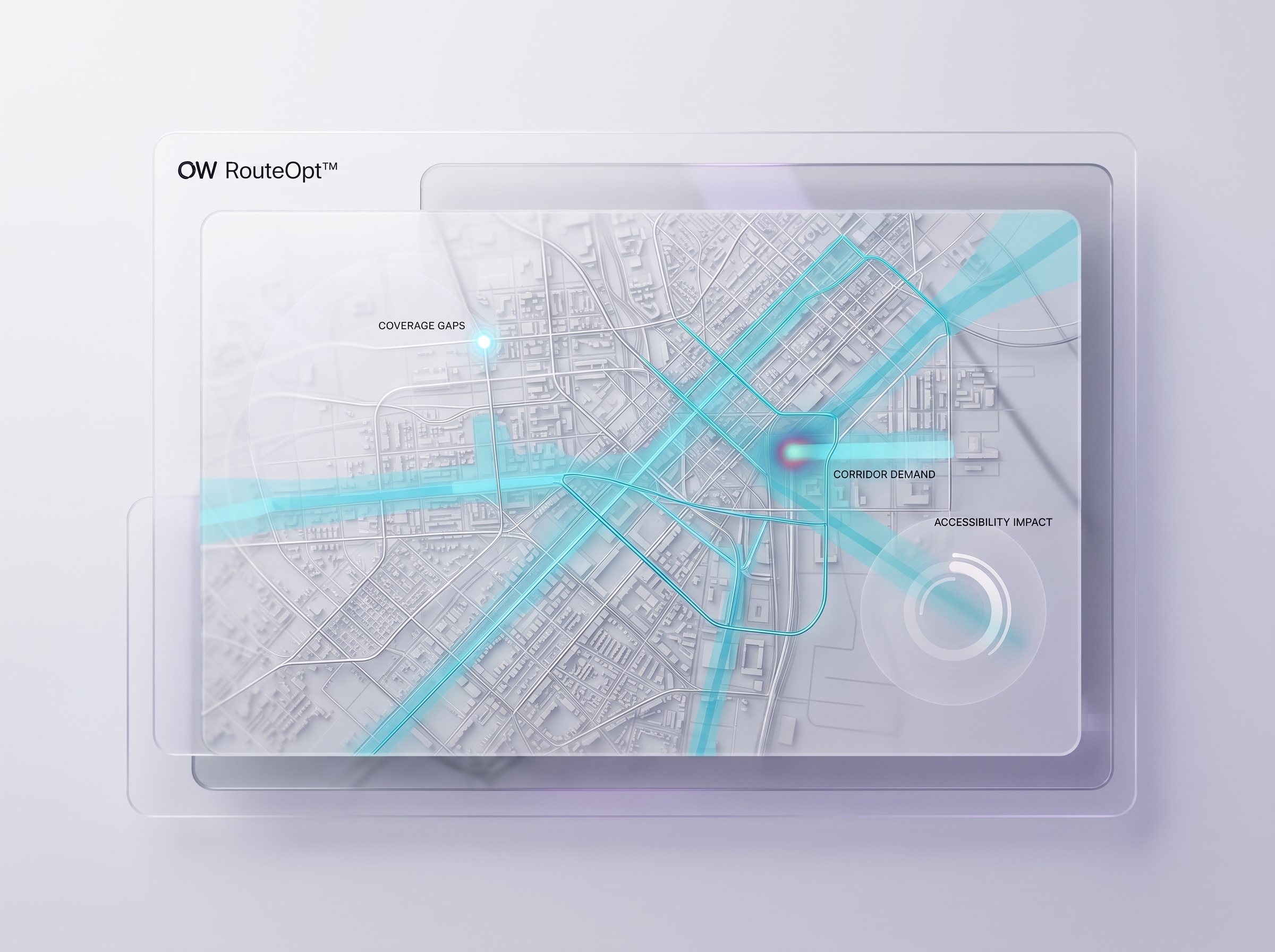
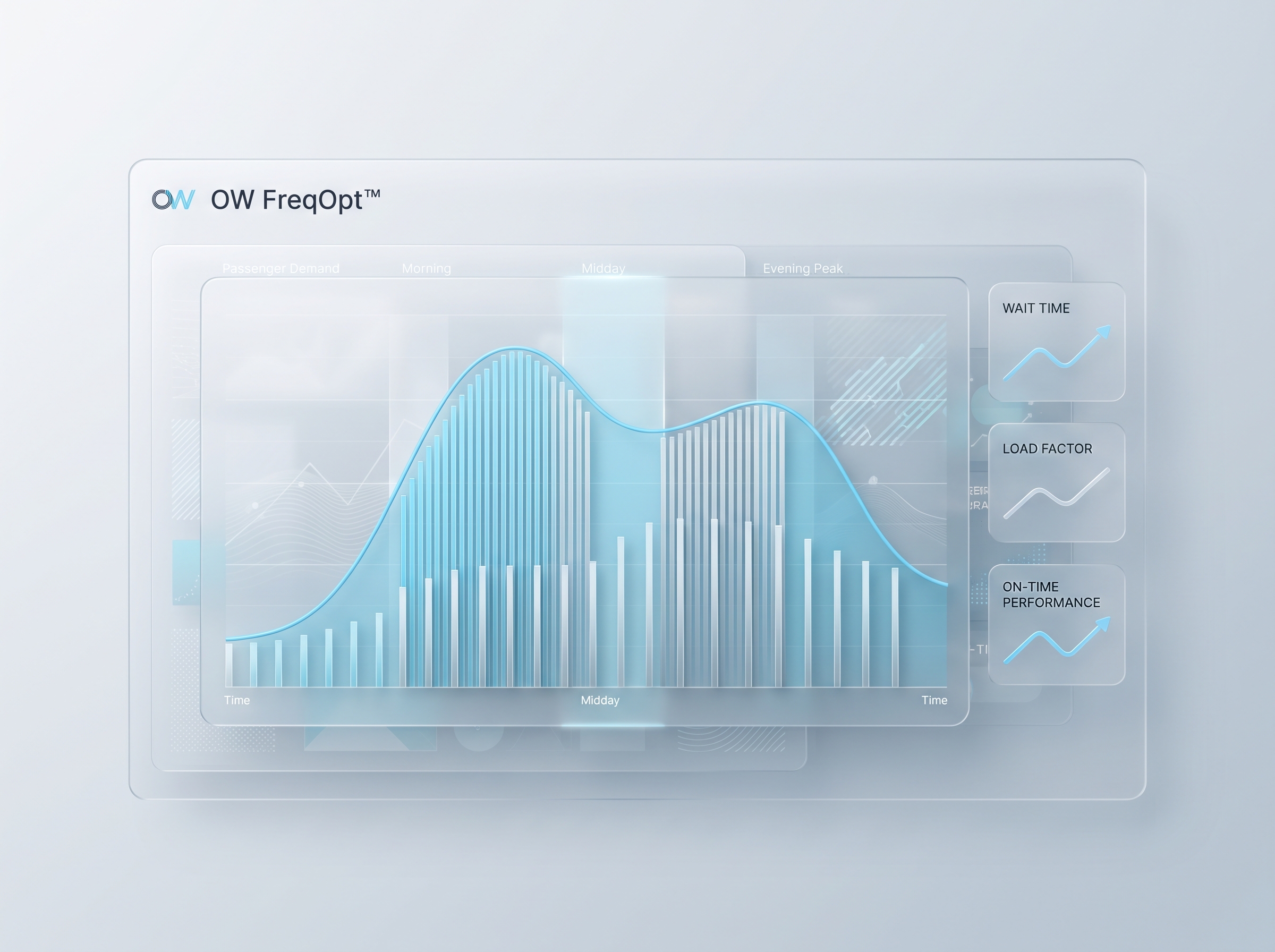
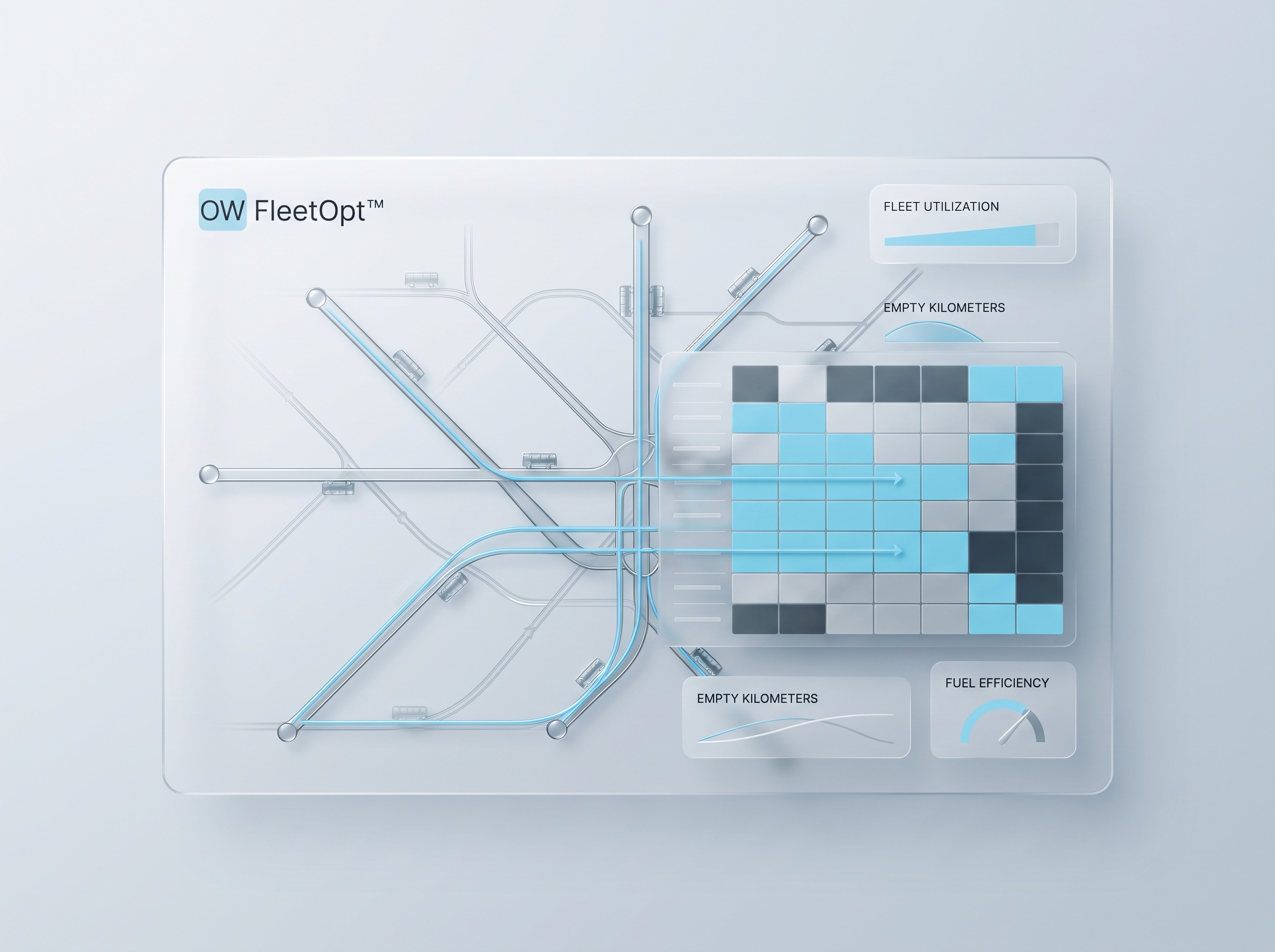
Rather than searching for a single "correct" solution, OW enables agencies to compare multiple policy scenarios using the same operational data—through layers such as OW RouteOpt™, OW FreqOpt™, OW FleetOpt™ and OW OD Matrix™.
Decision-makers can clearly understand the operational, financial, environmental and passenger impacts of every strategic choice before implementation.
Because good optimization does more than generate numbers. It builds confidence in decisions.

The Future of Transit Planning Is About Better Decisions, Not More Technology
Digital twins. Real-time AVL. Artificial intelligence. Predictive analytics. Multi-objective optimization.
These technologies are rapidly transforming public transport.
Yet technology alone does not create better cities.
The real transformation happens when data, policy, operations and human expertise work together inside a transparent decision-support framework.
Algorithms perform calculations. People make decisions. And better decisions always begin with better questions.
Conclusion
For years, the central debate in public transport planning has been:
Coverage or Ridership?
It remains an important discussion. But it is no longer the only one.
The question modern transit agencies should now be asking is:
Which strategic objectives matter most—and how can we balance them intelligently?
The cities that succeed in the coming decade will not simply be those with more data or more sophisticated AI.
They will be the cities that clearly define success, evaluate multiple policy scenarios, and make transparent, evidence-based decisions.
That is the philosophy behind OW.
Because we believe optimization is not about discovering a single perfect answer.
It is about helping cities make better decisions by balancing strategic priorities, operational realities and passenger needs.
Perhaps the most important question in modern public transport planning is no longer:
"How do we design the best network?"
Instead, it is:
"What does success truly mean for our city?"
Related Modules
Used in this piece

Related Posts
Continue with adjacent topics—from mixed-integer programming (MIP) and combinatorial optimization to multi-objective scenario modeling in public transit.

Why Is It So Difficult to Keep Everyone Happy in Public Transport?
Passenger demand and limited operational resources share the same network. The real challenge is not more buses — it is aligning supply with how people actually travel.
Buying Electric Buses Is Easy. Operating Them Optimally Is the Hard Part.
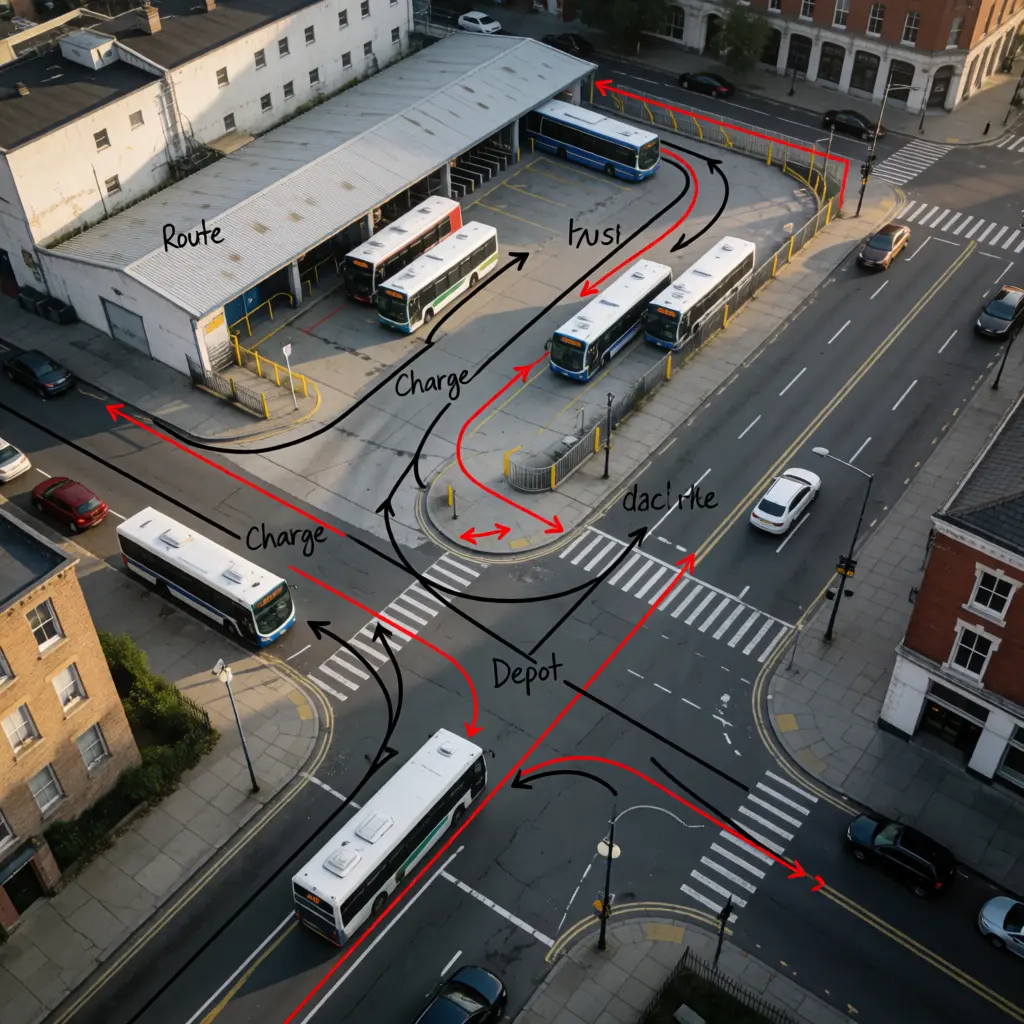
Electrification does not end at procurement. Vehicle assignment, charging schedules and energy constraints must be optimized together — or costs rise quietly every day.