12 min read
Is a Transfer Always a Bad Thing?

Written by Dr. Ümit Kuvvetli
Founder & Chief Optimization Scientist
For decades, public transport planning has been built around a powerful assumption:
A direct journey is always better.
But what if that assumption is not always true?
Consider a simple corridor:
A — B — C — D — E
Today, a single route operates from one end to the other:
A → B → C → D → E
From a passenger perspective, it seems ideal. No transfers. One vehicle. One continuous journey.
But from an operational perspective, the question is far more complex:
Does a longer route necessarily mean a better service?
At OW, we believe some of the biggest opportunities in public transport planning are hidden inside assumptions that have gone unquestioned for years.
One of them is this:
"Transfers are bad."
In reality, a transfer is not always a problem. Sometimes, it can be the result of a better-designed system.
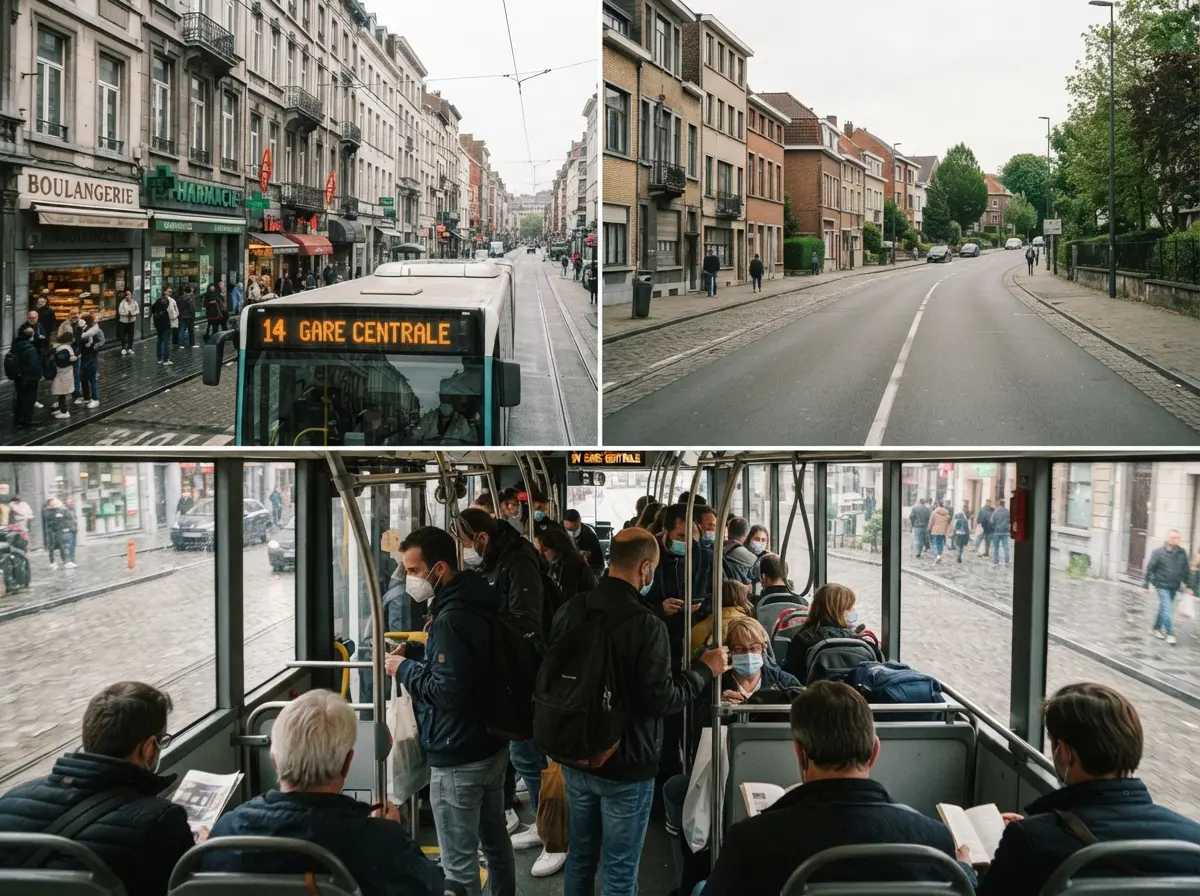
One Route. One Frequency. One Operating Logic.
Now consider what happens along that same corridor.
Demand between A and C may be high. Demand between C and E may be significantly lower.
Yet a single through-route often applies the same operational logic across the entire corridor:
- the same service frequency,
- similar vehicle capacity,
- the same operating pattern,
- continuous vehicle deployment from end to end.
The result?
Capacity may continue to operate where demand no longer justifies it. Vehicles, drivers and operating resources keep moving through lower-demand sections using a structure designed for the busiest part of the corridor.
What Changes if the Route Is Split?
Now imagine splitting the corridor at point C:
A → B → C and C → D → E
Some passengers will now need to transfer. That is clearly a cost.
But operationally, the two segments can now be managed independently:
- higher frequency on the busiest segment,
- lower frequency where demand is weaker,
- different vehicle capacities,
- different fleet requirements,
- different operating strategies based on actual demand.
The question is no longer simply:
"Will passengers have to transfer?"
The more important question is:
"Is the passenger cost of transferring greater than the operational value created by a better service design?"
That is where real planning begins.
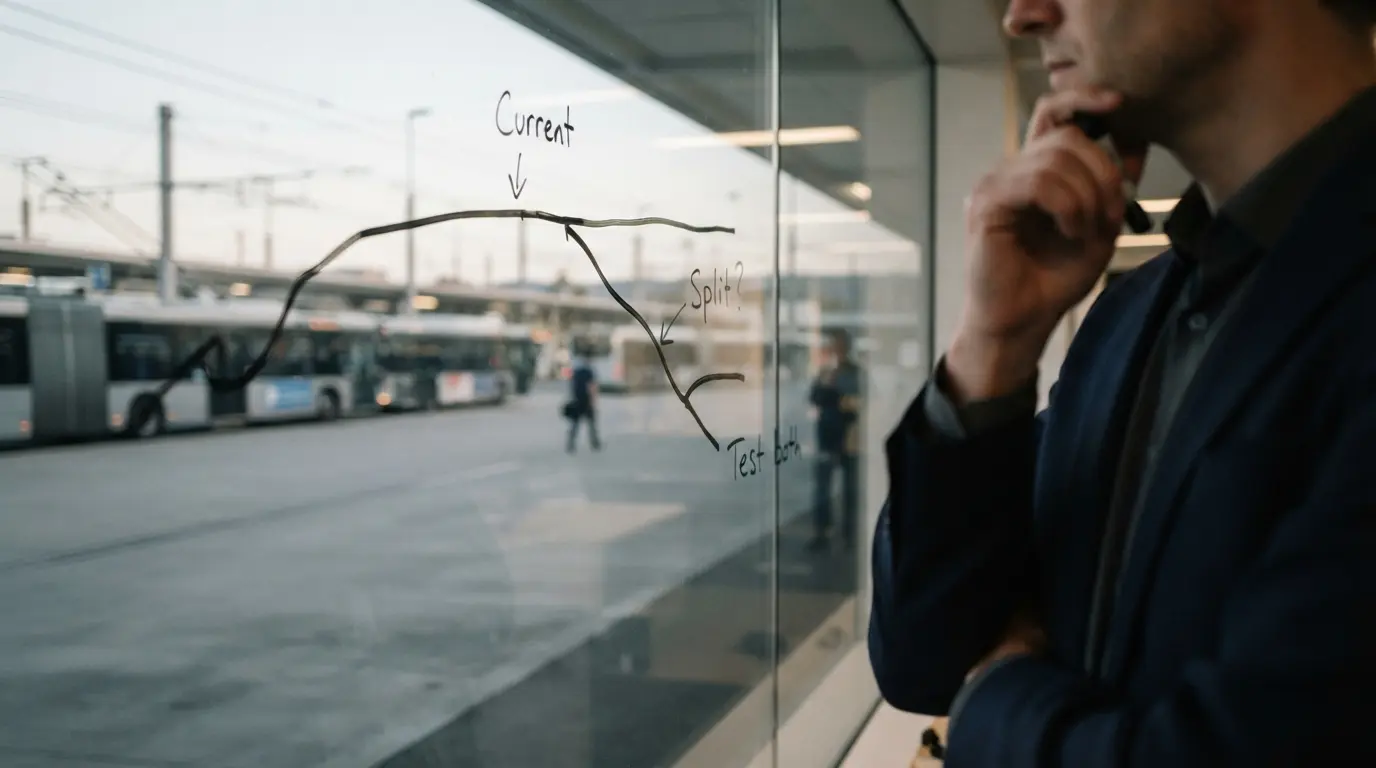
Sometimes, a Transfer Is Not a Compromise. It Is a Strategic Choice.
Transfers do create friction. More walking. More waiting. More uncertainty. The risk of missing a connection.
But the problem is not always the transfer itself. The problem is often a badly designed transfer.
If a transfer:
- requires minimal walking,
- offers reliable connections,
- keeps waiting times predictable,
- and preserves a good level of service,
it can become an acceptable part of a more efficient network.
At the same time, the operational benefits may be significant. A route structure aligned with actual demand can help:
- reduce unnecessary vehicle-kilometres,
- avoid excess capacity in lower-demand sections,
- improve fleet utilisation,
- allocate drivers and vehicles more effectively,
- and adjust service frequency to real passenger demand.
In other words:
A small transfer penalty may eliminate a much larger operational inefficiency.
Of course, the opposite can also be true. Splitting a route is not automatically the right solution.
The Real Challenge Is Not Splitting the Route. It Is Finding the Right Balance.
Deciding whether a route should operate as a single service or as separate segments cannot be reduced to a simple spreadsheet exercise. The decision requires several dimensions to be evaluated together.
1. Passenger Demand
Where does demand actually occur? Are passengers travelling across the entire corridor? Or are journeys concentrated within specific segments?
2. Passenger Experience
How much additional time does the transfer create? How far do passengers need to walk? How reliable is the connection? How predictable is the journey?
3. Operating Cost
What happens to fleet requirements? Vehicle-kilometres? Dead kilometres? Driver requirements? Vehicle utilisation?
4. Service Quality
Does reducing operational cost come at the expense of the passenger experience? Or could a redesigned structure actually improve service by increasing frequency where demand is highest?
A good optimisation model does not simply minimise cost. It searches for the right balance between cost, service quality and passenger experience—just as we explored in Coverage or Ridership?
Every Route Is Built on an Assumption.
Many public transport routes have evolved over time. They have been extended, modified, combined with other services, adjusted to respond to changing needs.
But there is one question that is not asked often enough:
If we were designing this route from scratch today, would we design it the same way?
Maybe the answer is yes. But maybe it is no.
Perhaps part of the corridor should operate at a higher frequency. Perhaps a lower-demand extension requires a different vehicle type. Perhaps direct service should be preserved for some passenger flows. Or perhaps a well-designed transfer could deliver both lower operating costs and better overall service.
The problem is that we cannot answer these questions through intuition alone. We need to test the alternatives.

Planning Should Not Be About Which Option "Looks Better."
The right approach is to compare scenarios. For the same corridor, for example:
Scenario 1 — Current structure: One route, current frequency, current fleet allocation.
Scenario 2 — Split operation: Two segments, different frequencies, different fleet requirements.
Scenario 3 — Hybrid structure: Higher-frequency service on the main corridor, a different operating model for the lower-demand section.
Then measure the impact of each scenario:
- total operating cost,
- vehicle-kilometres,
- dead kilometres,
- fleet requirements,
- driver requirements,
- passenger waiting time,
- transfer burden,
- demand coverage,
- service quality.
Because public transport planning has become too complex to optimise around a single KPI.
The OW Perspective: Test the Decision, Not the Assumption.
This is where the OW approach comes in.
By analysing Smart Card, AVL, GTFS and other operational data together, it becomes possible to understand not only how a network currently operates, but also how it could operate differently.
For a specific corridor, different scenarios can be evaluated:
- passenger demand can be analysed by segment,
- the existing route structure can be assessed,
- alternative service frequencies can be tested,
- different route configurations can be simulated,
- fleet requirements can be recalculated,
- and operational costs and service impacts can be compared.
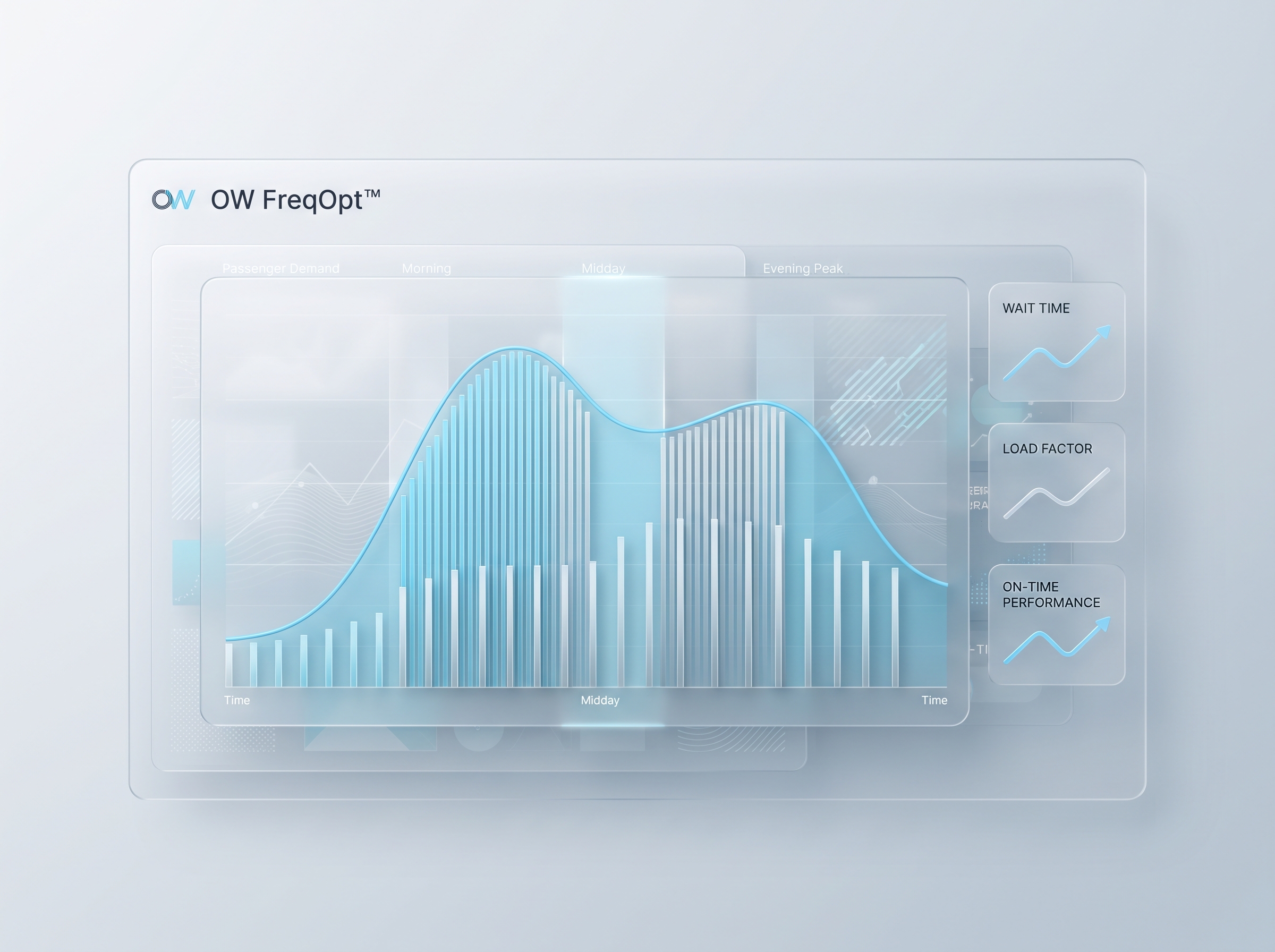
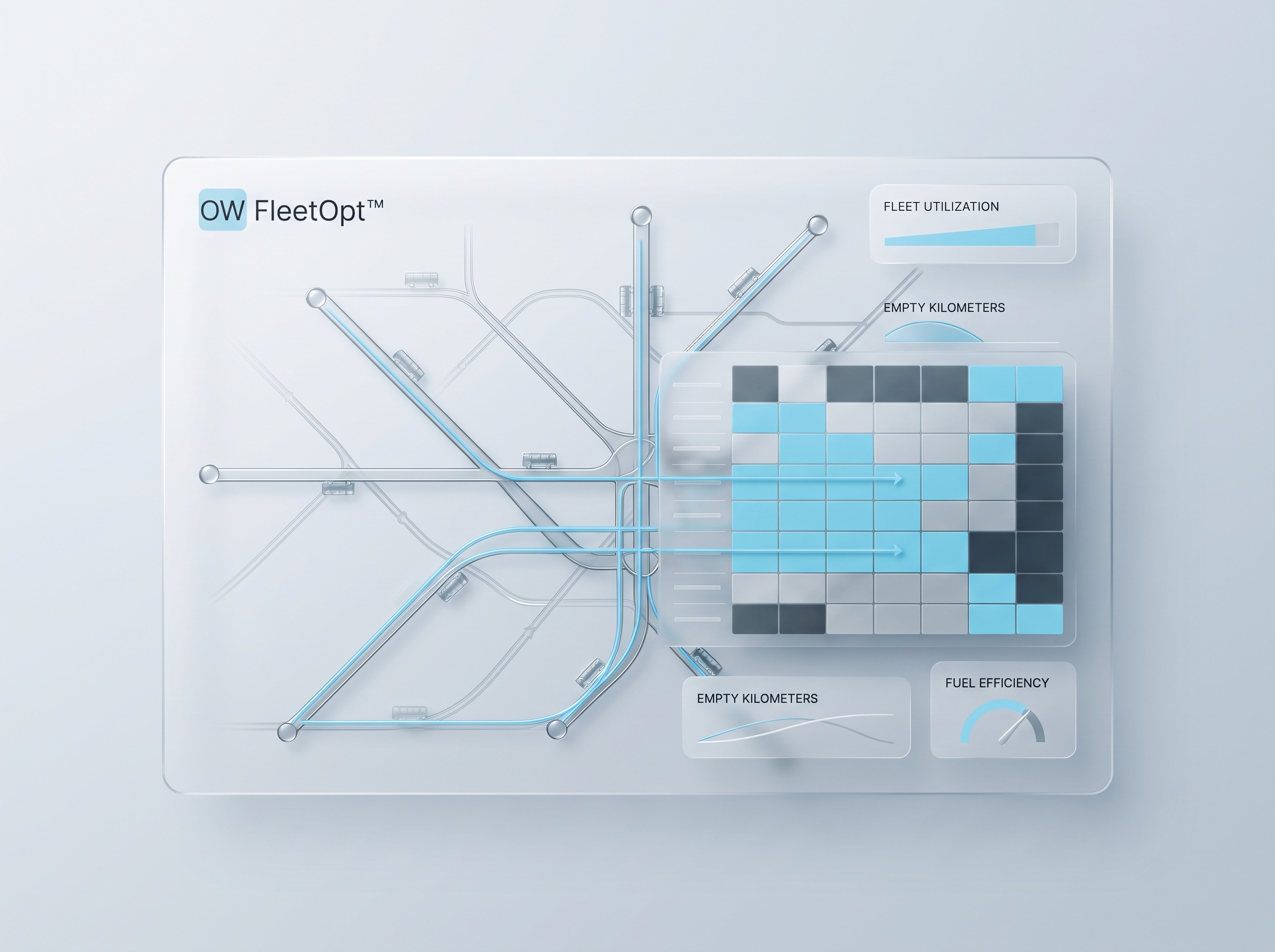
The optimisation approach behind OW RouteOpt™ and OW FreqOpt™ is built on the idea that frequency planning, fleet allocation and operational resources should not be treated as isolated decisions. They are all part of the same system.
Because changing one route can affect fleet requirements, driver schedules, depot operations, passenger transfer behaviour, and ultimately, total operating cost.
Route optimisation is not simply a routing problem. It is a network, resource and decision optimisation problem.
Maybe Some Routes Do Not Need to Be Optimised. Maybe They Need to Be Rethought.
In public transport planning, we often try to improve existing routes. Increase frequency slightly. Reduce it elsewhere. Change vehicle capacity. Adjust timetables.
But sometimes the more important question is more fundamental:
Is the current route structure still the right one?
Maybe the problem is not frequency. Maybe it is not fleet size. Maybe the problem is the route structure itself.
And sometimes, a better public transport system does not begin by adding more vehicles. It begins by redesigning the system around how demand actually behaves.
Is Your Network Still Designed Around Today's Demand?
With OW, existing route structures, passenger demand and operational resources can be analysed together to test alternative operating scenarios.
The objective is not simply to reduce costs. It is to find the right balance between lower operating costs and better service.
Stop relying on assumptions. Start testing your network with data-driven scenarios.
OW | Optimize the World — From data to decisions. From decisions to better operations.
Related Modules
Used in this piece

Related Posts
Continue with adjacent topics—from mixed-integer programming (MIP) and combinatorial optimization to multi-objective scenario modeling in public transit.

Why Is It So Difficult to Keep Everyone Happy in Public Transport?
Passenger demand and limited operational resources share the same network. The real challenge is not more buses — it is aligning supply with how people actually travel.
Buying Electric Buses Is Easy. Operating Them Optimally Is the Hard Part.
Electrification does not end at procurement. Vehicle assignment, charging schedules and energy constraints must be optimized together — or costs rise quietly every day.