14 min read
Buying Electric Buses Is Easy. Operating Them Optimally Is the Hard Part.

Written by Dr. Ümit Kuvvetli
Founder & Chief Optimization Scientist
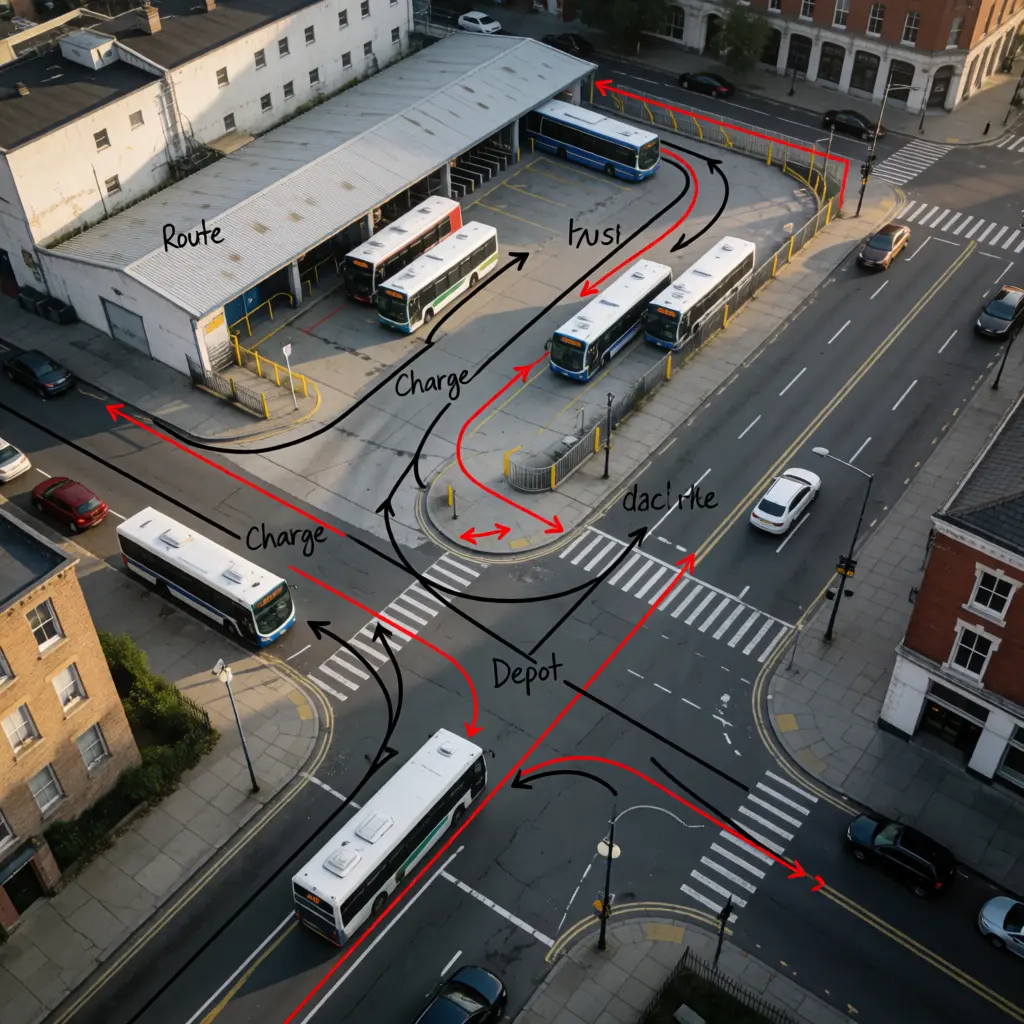
Electric buses are rapidly becoming a central part of urban transport strategies.
Cities announce ambitious zero-emission targets. Public transport authorities launch large procurement programs. Manufacturers introduce new battery technologies. Charging infrastructure investments are accelerating.
But there is a fundamental problem hiding behind this transition:
Buying electric buses is relatively straightforward. Operating them efficiently at scale is much harder.
The real challenge of electrification begins after the buses arrive.
The Electric Bus Is Not Just a Diesel Bus With a Different Engine
For decades, public transport planning has been built around operational assumptions shaped by diesel fleets.
A diesel bus can generally be assigned to a route, refueled within minutes and returned to service with relatively limited constraints.
Electric buses operate under a very different set of conditions.
Their operational feasibility depends on multiple interconnected variables:
- battery capacity
- state of charge
- energy consumption
- route topology
- gradients
- passenger load
- weather conditions
- traffic congestion
- charging infrastructure
- charging duration
- depot capacity
- vehicle availability
- and the timetable itself
This means fleet planning can no longer focus only on vehicles and schedules.
It must also consider energy.
Every operational decision now has an energy consequence.
Range Is Not a Fixed Number
One of the most common mistakes in electric bus planning is treating vehicle range as a static specification.
A manufacturer may provide a theoretical range under specific testing conditions. But real-world operations are rarely theoretical.
The same electric bus can consume significantly different amounts of energy depending on:
- traffic conditions
- outside temperature
- air conditioning or heating
- passenger occupancy
- road gradients
- stop frequency
- driving behavior
- and average speed
A route that is operationally feasible in spring may become problematic during extreme summer or winter conditions.
This creates a planning problem that traditional scheduling systems were never designed to solve.
The question is no longer simply:
Can this vehicle operate this trip?
The more relevant question becomes:
Can this vehicle complete this trip, remain within battery safety limits, meet its next operational requirement and still fit into the available charging infrastructure?
That is a much more complex optimization problem.
The Hidden Complexity of Charging
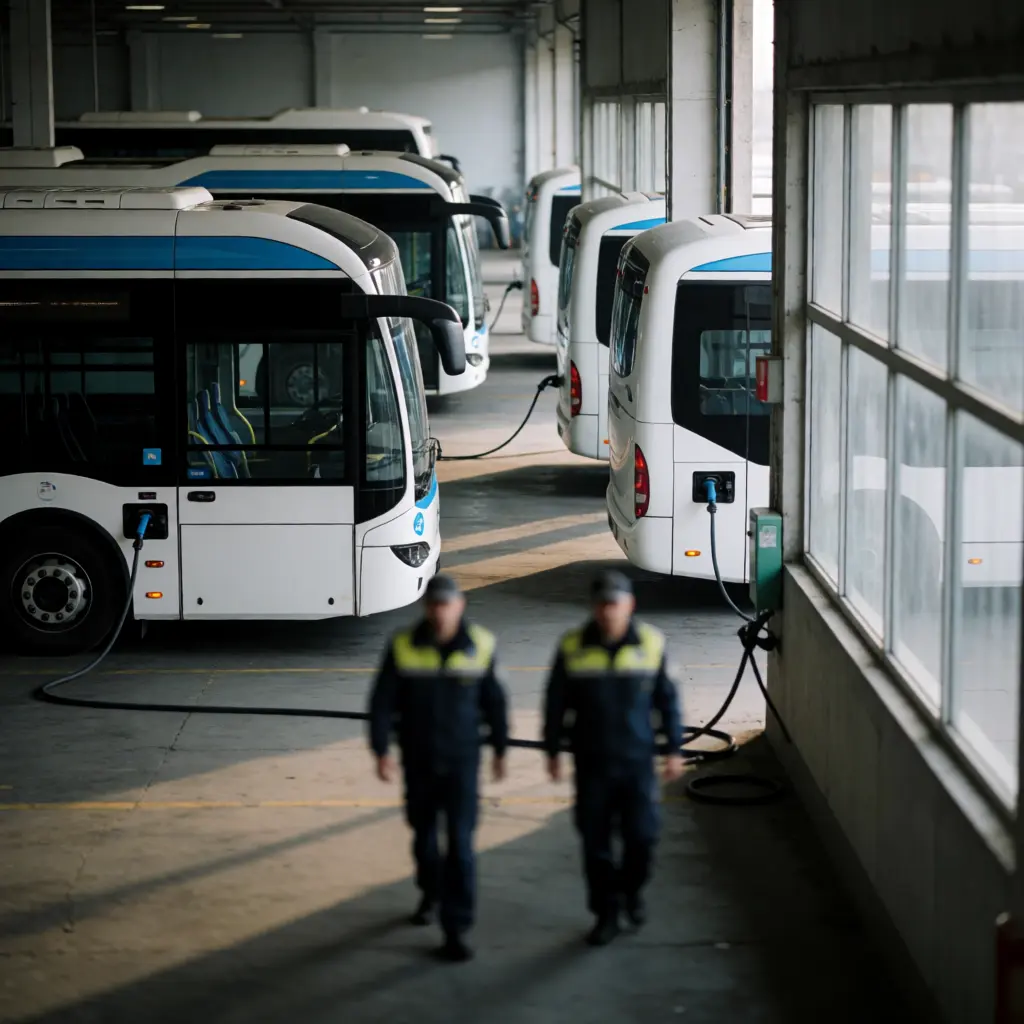
Charging infrastructure introduces another operational layer.
A charging station is not an unlimited resource.
It has:
- a location
- limited capacity
- limited simultaneous charging positions
- charging curves
- power constraints
- grid limitations
- and time requirements
If several buses need charging at the same time, the system must determine:
- which vehicle should charge first
- for how long
- at which charger
- and whether another vehicle can continue operating instead
Poor charging coordination can quickly create operational bottlenecks.
A fleet may technically have enough electric buses.
It may even have enough chargers.
But if charging schedules are not synchronized with vehicle assignments and timetables, the operation can still fail.
Fleet Assignment Becomes an Energy Optimization Problem
In a conventional fleet, the objective might be relatively simple:
Assign available vehicles to trips while minimizing dead mileage and maximizing utilization.
With electric buses, the optimization model becomes significantly more complex.
The system must simultaneously consider:
Vehicle Assignment — Which vehicle should operate which trip?
Energy Consumption — How much battery energy will that trip require under realistic operating conditions?
Battery State of Charge — Will the vehicle have enough energy to complete its current and future assignments?
Charging Opportunities — Where and when can the vehicle recharge?
Charger Capacity — Are charging resources available at the required time?
Operational Continuity — Can the vehicle continue its planned sequence without disrupting service?
Cost — What is the most efficient solution in terms of energy, infrastructure and fleet utilization?
These decisions cannot be optimized independently.
They are part of the same system.
More Buses Is Often Not the Answer
When an electric bus operation encounters problems, the first reaction is often to increase capacity.
Buy more buses.
Install more chargers.
Increase battery size.
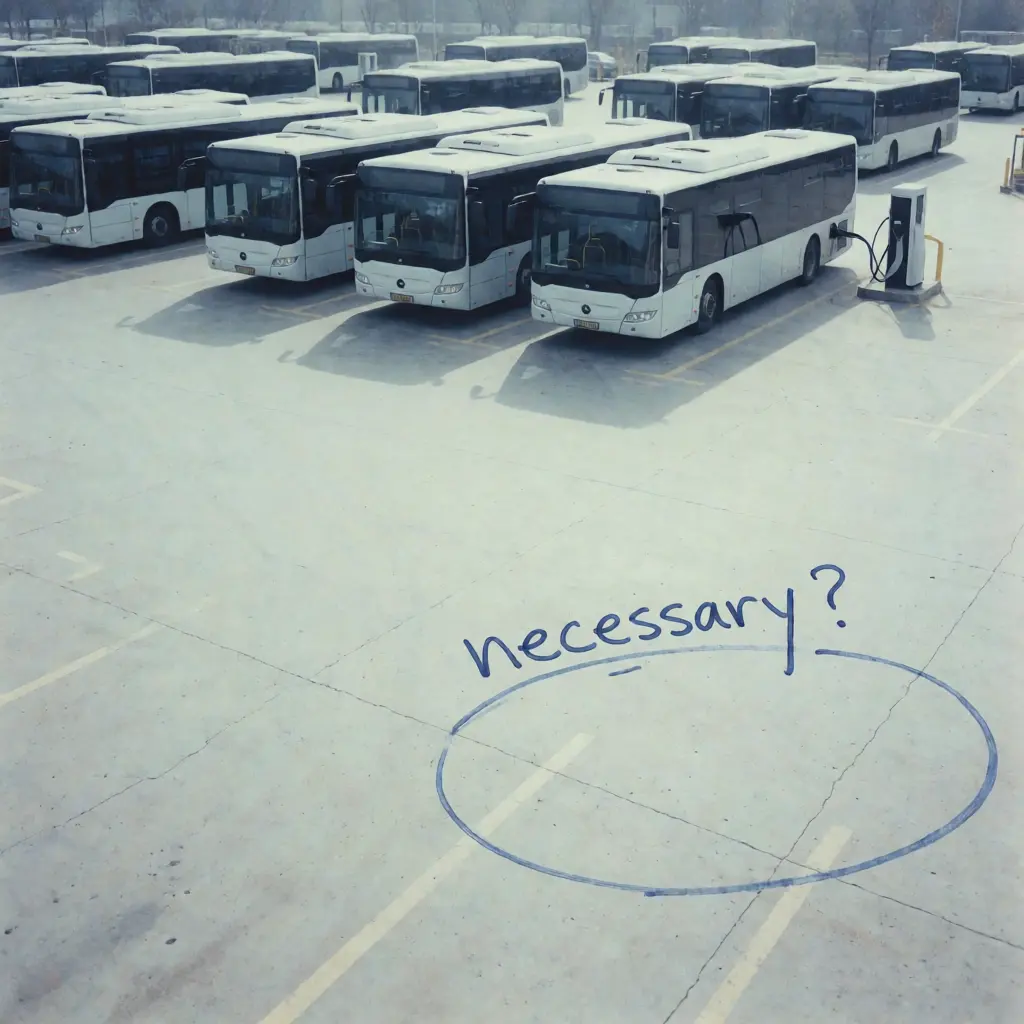
But these investments can sometimes compensate for inefficient planning rather than solve the underlying problem.
A poorly optimized operation may require:
- additional spare vehicles
- unnecessary charging infrastructure
- excessive battery capacity
- additional depot space
- and higher capital expenditure
Optimization can reveal that some of these investments are avoidable.
The goal should not simply be to electrify the existing operation.
The goal should be to redesign the operation around the new technological constraints and opportunities.
Sometimes the most effective solution is not a larger fleet. It is a better assignment strategy.
Timetables and Energy Are Now Connected
Traditionally, timetables and fleet planning could often be treated as separate planning layers.
That separation becomes increasingly difficult with electric fleets.
A timetable determines:
- vehicle departure times
- layover periods
- route sequences
- recovery time
- and charging opportunities
A small change in a timetable can significantly affect fleet feasibility.
For example, adding five minutes of recovery time at a terminal may create enough time for opportunity charging.
Changing the sequence of two trips may eliminate the need for an additional vehicle.
Moving a charging activity by thirty minutes may prevent a charger capacity conflict.
This means electric bus operations require integrated planning.
Timetabling, vehicle scheduling and charging planning should increasingly be solved together rather than as isolated processes.
This Is Where Optimization Becomes Critical
The mathematical structure behind electric bus operations is highly complex.
The system contains thousands of interconnected decisions.
A realistic network may involve:
- hundreds of routes
- thousands of daily trips
- hundreds or thousands of vehicles
- multiple depots
- different vehicle types
- different battery capacities
- multiple charging stations
- and constantly changing operational conditions
The number of possible vehicle-trip combinations quickly becomes enormous.
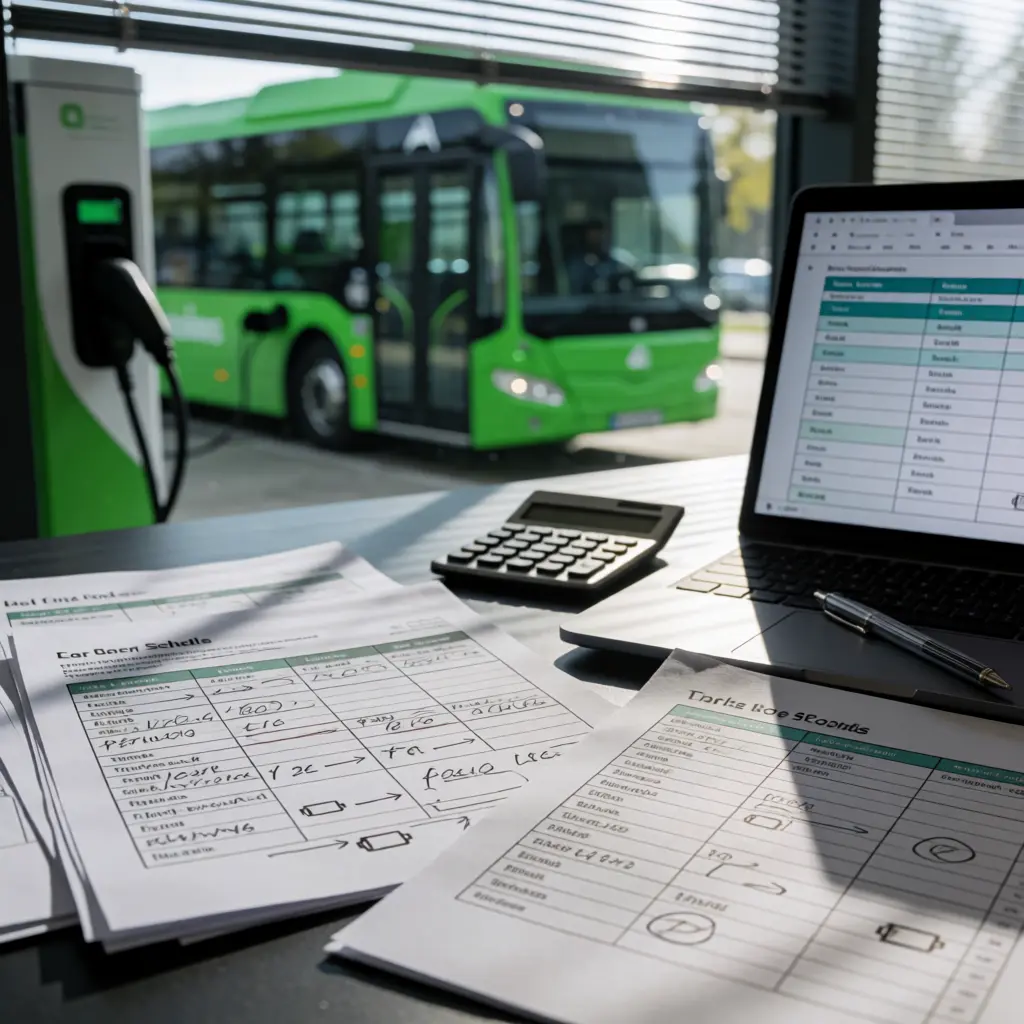
This is where traditional spreadsheet-based planning reaches its limits.
Advanced optimization methods can evaluate millions of possible combinations and search for solutions that balance multiple objectives.
These may include:
- minimizing fleet size
- minimizing operational cost
- reducing dead mileage
- maximizing vehicle utilization
- minimizing charging conflicts
- maintaining battery safety margins
- and ensuring service reliability
The challenge is no longer simply generating a feasible plan.
The real challenge is finding the best possible plan among an enormous number of feasible alternatives.
AI Alone Is Not Enough
Artificial intelligence is becoming increasingly important in transport operations.
Machine learning can help predict:
- passenger demand
- traffic conditions
- travel times
- energy consumption
- battery degradation
- and charging requirements
But prediction alone does not create an operational plan.
Knowing that a bus will consume a certain amount of energy is useful.
The next question is:
What should the operator do about it?
This is where predictive AI and mathematical optimization need to work together.
AI can estimate what is likely to happen.
Optimization can determine what should happen.
The combination creates a more powerful decision-support system:
Prediction → Optimization → Operational Decision
This approach allows transport agencies to move from reactive management toward proactive and data-driven operations.
The Future Electric Depot Will Be a Dynamic System
The depot of the future will not simply be a place where buses are parked overnight.
It will become an active energy and operational management environment.
Every night, the system may need to determine:
- which buses should charge
- in what order
- for how long
- at which charging station
- while considering electricity prices
- grid capacity
- the next day's schedules
- and battery health
In the future, fleet optimization may also interact with:
- renewable energy production
- energy storage systems
- smart grids
- vehicle-to-grid technologies
- and dynamic electricity pricing
This transforms public transport fleet management into a much broader optimization ecosystem.
Electrification Is an Operations Problem Before It Is a Procurement Problem
The transition to electric mobility is often discussed in terms of procurement.
How many buses should we buy?
Which manufacturer should we choose?
What battery capacity do we need?
How many chargers should we install?
These are important questions.
But they come before an even more important one:
How will the entire system operate?
Without a clear operational optimization strategy, even the most advanced electric fleet can suffer from:
- low vehicle utilization
- unnecessary infrastructure investments
- charging bottlenecks
- reduced reliability
- excessive spare fleet requirements
- and higher-than-expected operating costs
Electrification should therefore not be treated as a simple vehicle replacement project.
It is a transformation of the entire operational system.
As we also discuss in our work on carbon-neutral fleet optimization, cleaner vehicles only deliver their full value when assignment, energy and cost logic move together.
The Competitive Advantage Will Be Operational Intelligence
In the coming years, many cities will own electric buses.
That alone will not create a competitive advantage.
The difference will increasingly come from how intelligently those fleets are operated.
The most successful transport agencies will not necessarily be those with:
- the largest batteries
- the largest charging networks
- or the largest fleets
They will be the ones capable of making better decisions with the resources they already have.
They will understand:
- where each vehicle should operate
- when it should charge
- how much energy it will consume
- how schedules should adapt
- and how the entire system can respond to changing conditions
That is where optimization becomes essential.
Because buying an electric bus may be easy.
Operating an entire electric fleet efficiently is a completely different challenge.
And solving that challenge will require something more than vehicles and chargers.
It will require operational intelligence.
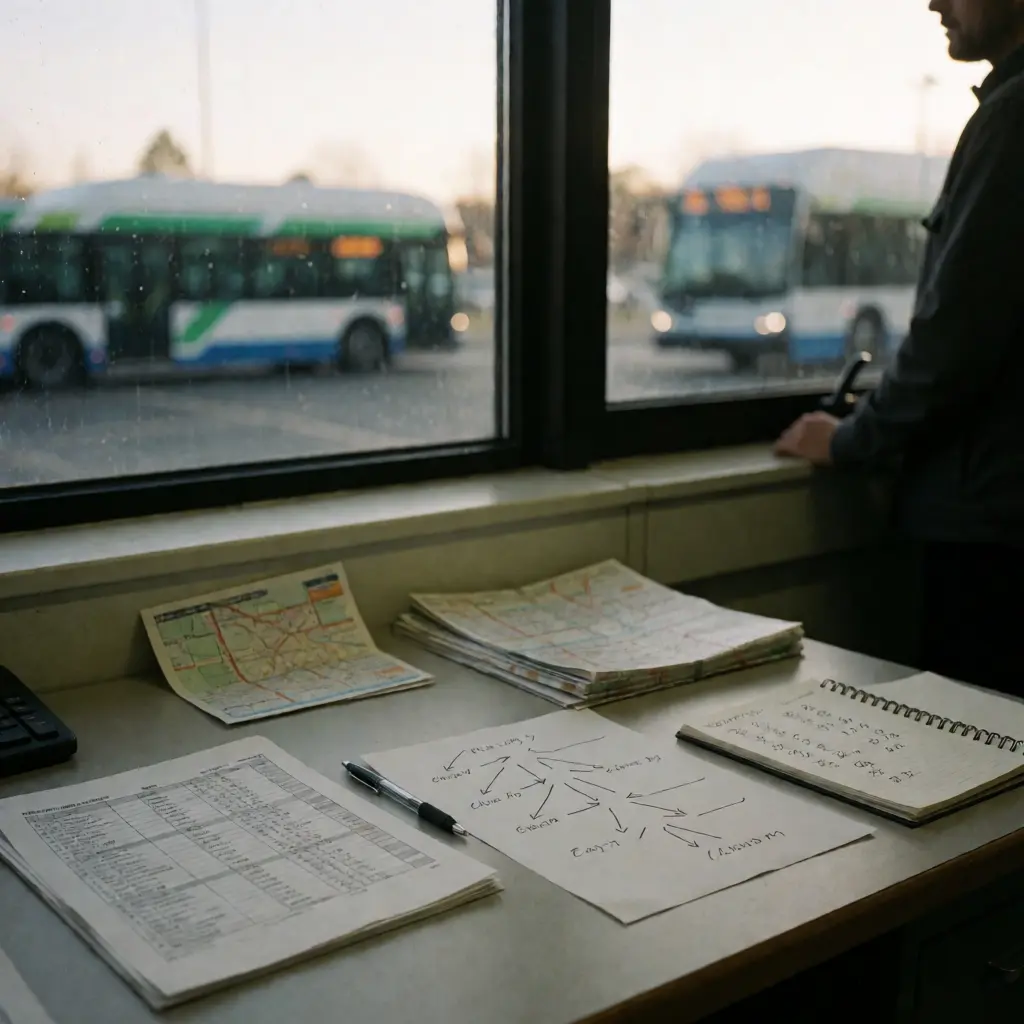
The OW Perspective
At OW, we see electric fleet transition not as a procurement challenge, but as a large-scale optimization problem.
Electric vehicles, charging infrastructure, timetables, energy consumption and operational constraints should not be managed as separate systems.
They are interconnected components of a single decision environment.
OW Suite follows a familiar path:
Data → Model → Optimization → Scenario → Decision
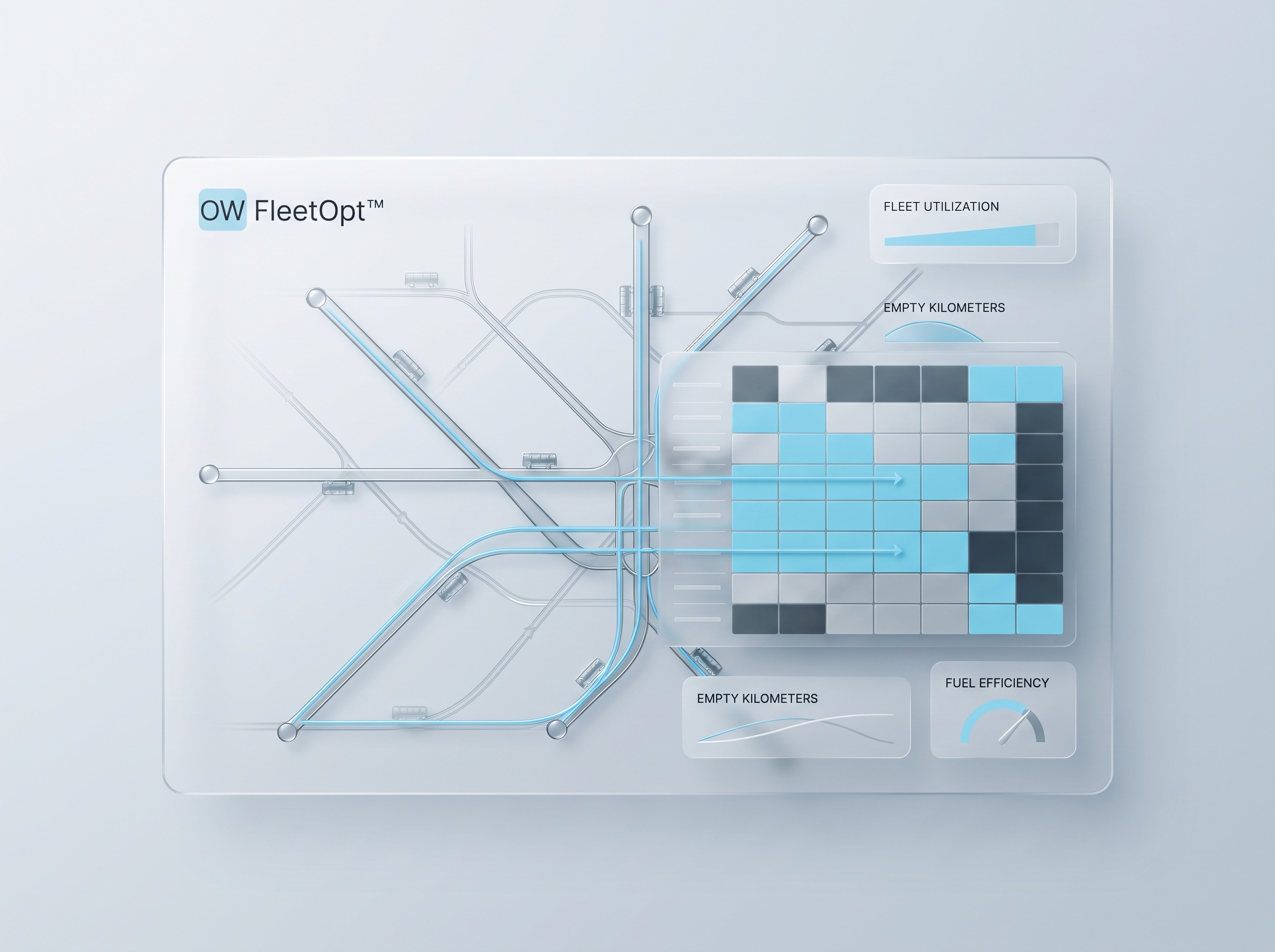
FleetOpt™ helps agencies test vehicle assignment and rotation under real operational constraints.
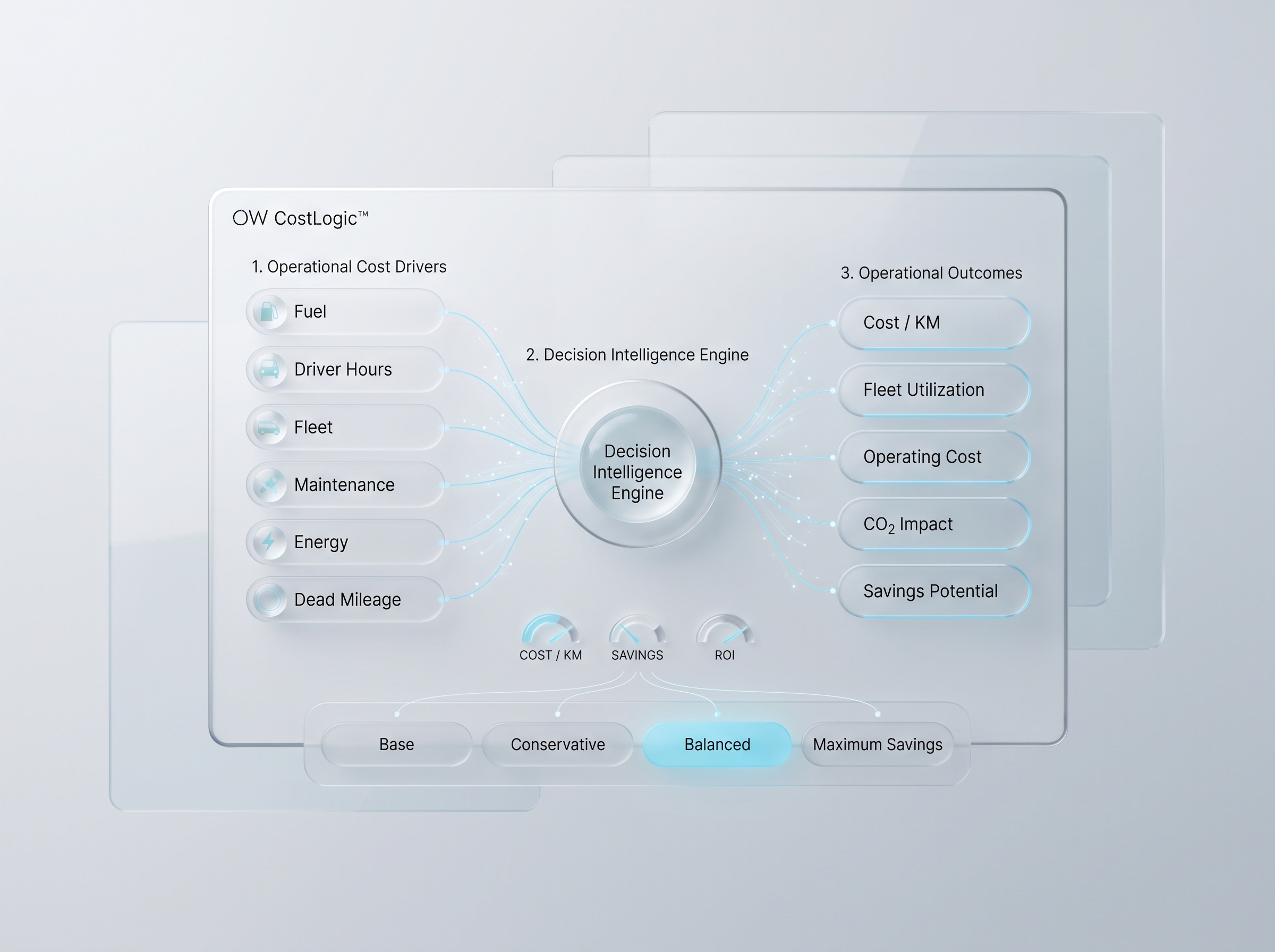
CostLogic™ makes the energy and cost consequences of those decisions visible.
The future of zero-emission public transport will depend not only on cleaner vehicles.
It will depend on smarter operations.
Because the real value of electrification is not simply replacing diesel buses with electric ones.
It is building an operation intelligent enough to make electric mobility work at its full potential.
Ready to stress-test your electric fleet plan before the next procurement cycle?
Start a scenario conversation with OW and see how assignment, charging and energy decisions change together.
Related Modules
Used in this piece
Related Posts
Continue with adjacent topics—from mixed-integer programming (MIP) and combinatorial optimization to multi-objective scenario modeling in public transit.

Are Ants Better Than Urban Planners?
What collective intelligence can teach us about public transport — and why exploring the solution space matters more than picking a single algorithm.
Is a Transfer Always a Bad Thing?
A direct journey is always better — or is it? How splitting a corridor can reduce cost, improve frequency, and still serve passengers well.