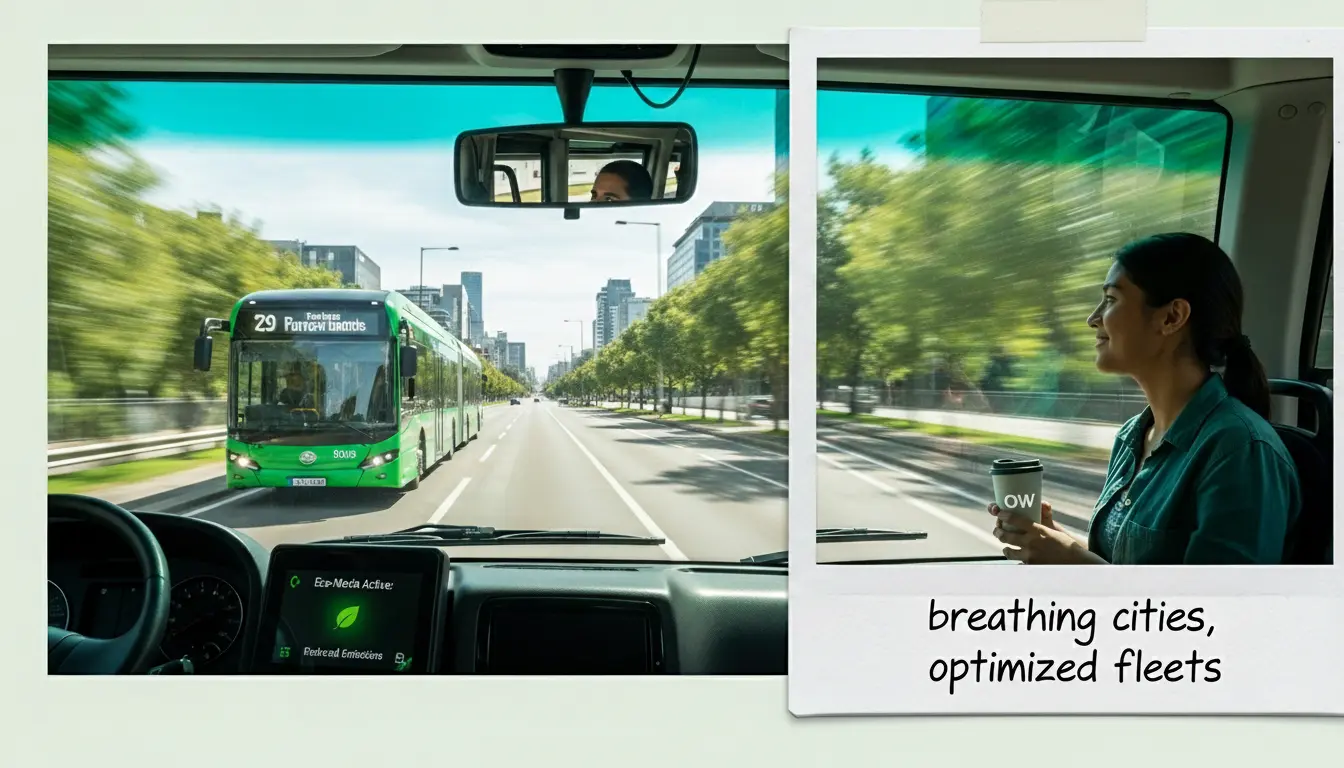
Carbon Neutral Cities: How Fleet Optimization Makes Sustainability Real
Net zero emissions. Sounds too far away, doesn't it? Actually, it's only 27 years from now. A child starting elementary school today will be graduating from university and entering the workforce by then. What kind of city will we leave them?
A carbon-neutral city sounds like a beautiful vision. But when you look at the math, transportation carries one of the biggest shares. Urban mobility accounts for roughly 15–20% of global carbon emissions. And a significant portion comes not from cars, but from inefficiently operated public transport fleets.
Here's the interesting part: Switching to electric buses isn't enough on its own. If a bus runs empty kilometers or idles unnecessarily in traffic, it's still wasting energy—regardless of what powers it. The real challenge is managing your existing fleet smarter.
1. Eliminating Empty Kilometers: Saying Goodbye to "Dead Runs"
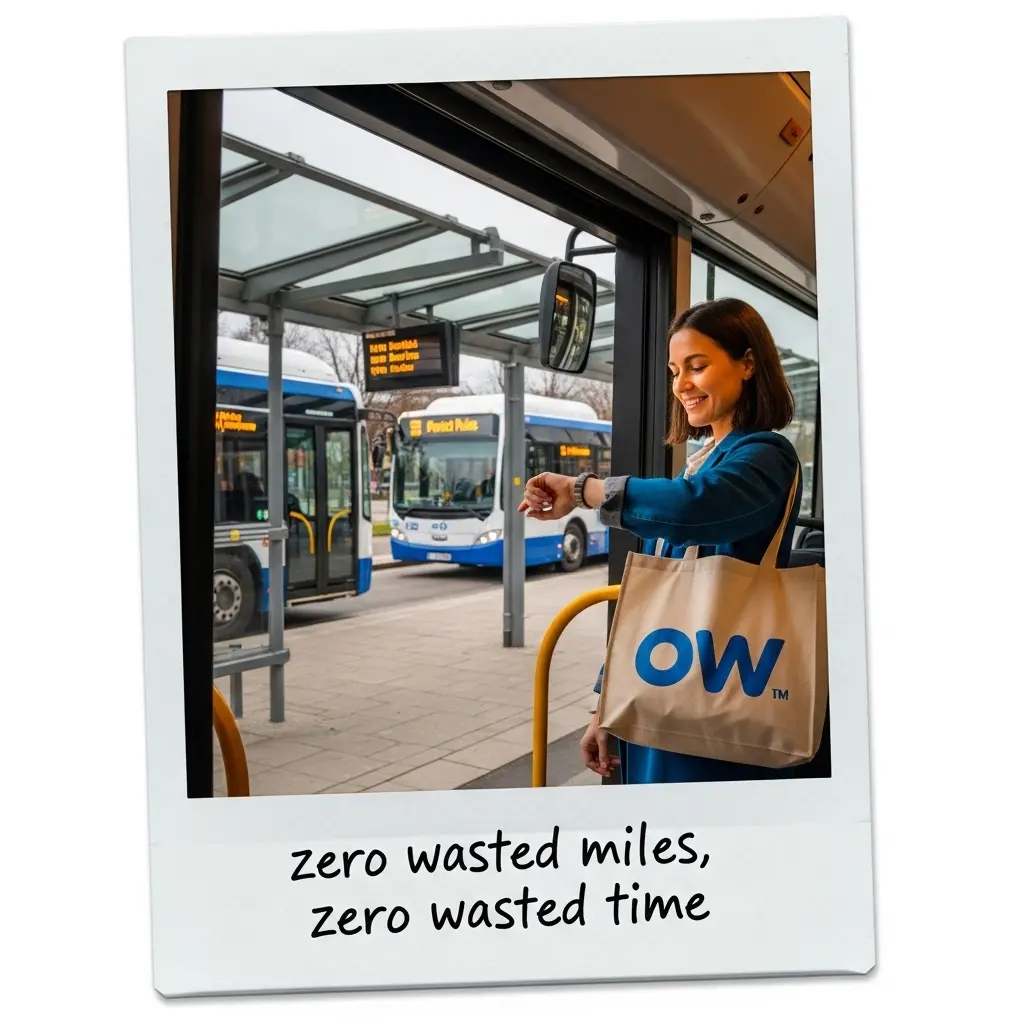
The biggest hidden cost in public transport fleets is "empty kilometers." Think about it: buses traveling from the depot to their starting point, or returning to the garage after a trip. Not a single passenger on board, but plenty of exhaust.
How do we fix this? Modern systems use intelligent vehicle assignment algorithms. When a bus finishes one route, instead of heading back to the depot, it can be directed straight to another route—almost like the bus is making a transfer itself. This approach typically reduces empty kilometers by 25–40%.
Let's put some numbers on it. In our project with İzmir Metropolitan Municipality, we helped eliminate 1,200 tons of CO₂ annually—just from reducing empty kilometers (around half of the total potential savings). For a deeper dive into this logic, see: The Hidden Mathematics of Empty Kilometers.
2. Demand-Driven Frequency: Not Every Hour Needs the Same Service
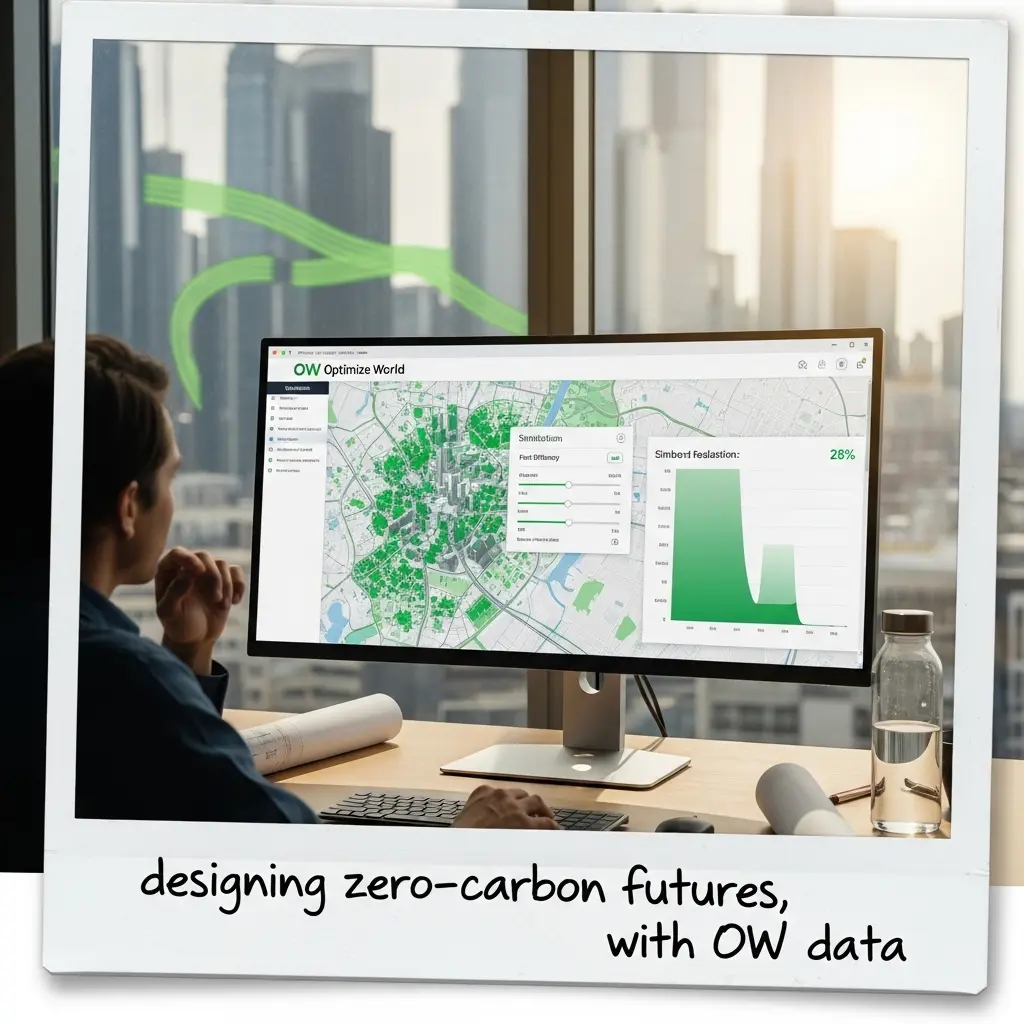
Picture a bus route. At 8:00 AM, it's packed. At 2:00 PM, there are five passengers. But the schedule? Exactly the same. What does that mean? Those midday trips are wasting fuel and creating unnecessary emissions.
When data science and mathematics come together, interesting things happen. Smart fleet management analyzes how many passengers ride each route, hour by hour. Frequencies drop during low-demand periods and increase during rush hours—all without compromising passenger satisfaction.
In an upcoming article on passenger behavior patterns, we'll explore how these hourly demand signatures can be turned into optimization signals. This approach becomes even more powerful when built on high-quality schedule data. For that foundation, see: GTFS Data vs. Service Quality.
3. Signals, Stops, and Data: Small Dwells, Big Impact

Every second a bus spends at traffic lights or bus stops means idling. Idling means fuel consumption without movement. A 10-second idle might seem trivial, but multiply it by thousands of buses and it becomes a serious emissions category.
Modern systems analyze stop locations and signal timing to quantify the impact of these micro-dwells on fuel consumption. They provide municipalities with stop-by-stop improvement recommendations. Sometimes moving a stop a few meters or adjusting a light cycle can make a surprising difference.
At this stage, data quality becomes critical. Vehicle location traces (AVL/GPS), smart card taps, and GTFS schedules come together to form a real-time "emissions map." This enables decision-making not just at the line level, but at the level of individual stops and intersections.
Sustainability and Operational Efficiency Go Hand in Hand
There's a common misconception: "Going green is expensive." Fleet optimization proves the opposite:
- Less fuel consumption → Lower operational costs
- Fewer emissions → Avoiding carbon taxes and accessing green funds
- More efficient vehicle use → Extended vehicle life and reduced maintenance
Win-win. Your budget wins. The planet wins.
Frequently Asked Questions
Does fleet optimization actually reduce emissions?
Absolutely. By cutting unnecessary kilometers, reducing low-demand trips, and optimizing idle times, you save fuel directly. That means automatic emission reductions.
Do we still need optimization if we're switching to electric buses?
Yes—even more so. Electric buses also waste energy on empty runs. Poor routing drains batteries faster and strains charging infrastructure. Optimization is critical for range management and charging scheduling.
How quickly can we see results?
OW's 12-Week Pilot Program delivers quick wins using your existing data. Full carbon neutrality is a longer journey, but optimization is the fastest, most cost-effective first step.
What data do you need?
GTFS (schedule data), real-time vehicle locations (AVL/GPS), and smart card transaction data. All data is protected by our KVKK/GDPR-compliant infrastructure.
For the Next Generation
2053 might seem distant, but it's really just one generation away. The children starting school today will be the university graduates, the professionals, the decision-makers of that future. The city we leave them depends on the choices we make now.
Buying new buses matters. But running your existing fleet smarter? That's perhaps the most urgent—and most affordable—move you can make. No massive investment required. Just smarter use of data.
Curious how much carbon your city could save?
Calculate your savings now! | Explore the 12-Week Pilot | Our Security Commitment
Related Posts
Beyond Routing: Why Static Scheduling is Killing Your Fleet Efficiency
Every morning, public transport planners look at maps that seem perfectly organized. But there is a silent observer that static plans fail to account for: the inherent volatility of urban life.
GTFS Data vs. Service Quality
Every public transport system runs on two essential fuels: the diesel or electricity that powers its vehicles, and the data that powers its decisions. While the first is meticulously measured and managed, the second—specifically your GTFS data—often operates in the shadows.